Stillness Among the Cups: A Birmingham Field Guide to the Unhurried Tea Break
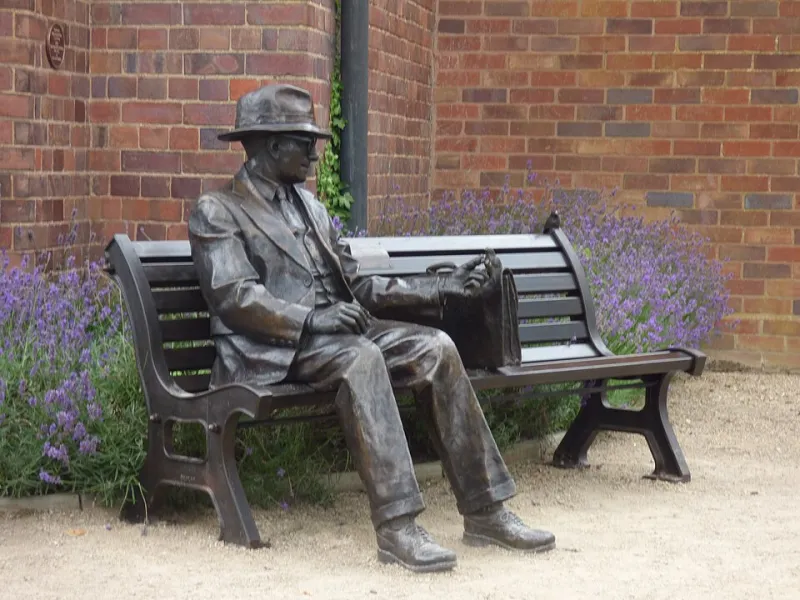
Photo: Elliott Brown from Birmingham, United Kingdom, CC BY-SA 2.0, via Wikimedia Commons
Tea ceremony is often imagined as a refuge from the city: a room of tatami, a kettle with a deliberate sound, guests who know when to bow and when to be silent. That room matters. But the attention it asks for is not confined to it, and this is an argument for taking that attention into Birmingham’s busiest cafés. Not the ritual, not the utensils, not the performance of expertise—just the practice of arriving, waiting, receiving a cup and giving it your full regard.
Attention is portable
The discipline of tea is largely a discipline of pace. One enters, greets, sits, waits for the water, listens for the kettle, receives the bowl. In an ordinary café none of these forms apply, but the underlying movement does: stop, attend, receive, finish. A café is a useful training ground precisely because it is imperfect. The grinder is loud, the queue is restless, the tables are close. If you can taste one cup there, you have learned something that a silent tea room cannot teach.
Choosing the hour
Realism matters. Birmingham cafés are least hurried on weekday mid-mornings, roughly 10am to 11.30am, and in the mid-afternoon lull between 2.30pm and 3.30pm. Saturday from 11am to 3pm is not the time to attempt contemplation; nor is the school-run hour. Sunday early is often good, but only before the brunch service gathers. If you work in the city centre, a 10.15am break is more generous than it sounds. If you are in the suburbs, the same rule holds: go before the lunch crowd, not after it.
Choosing the room
Neighbourhood cafés serve this practice better than destinations. A back room in Stirchley, a small counter in the Jewellery Quarter, a window seat in Kings Heath or Moseley, a quiet corner in Harborne or Bournville: these are not tea rooms, and that is the point. Look for three things: a seat that does not face a queue, a table large enough for one cup and one pair of hands, and staff who are not trying to turn the room over in ten minutes. A café with a long bench and a shared table can be excellent if you are willing to sit still; a café with bright lights and a playlist at conversation volume is not.
Four habits
First, put the phone away before you order. Not face down on the table; away. The cup is the object of attention. Second, order something simple. A pot of tea, a single coffee, a glass of water. A complicated order invites a complicated hour. Third, receive the cup with both hands when it arrives, even if it is a takeaway cup on a saucer. The gesture is not decorative; it slows the hand and marks the beginning. Fourth, wait before the first sip. Let the cup sit for a moment. Notice the steam, the colour, the weight. Then drink.
These habits are small, and that is their strength. They do not require a tea room, a licence or a teacher. They require only the decision to treat thirty minutes as a period rather than a gap.
What this is not
This is not a licence to occupy a table for three hours over one cup, nor to treat café staff as attendants in a private ceremony. Buy what you can, leave when the room fills, and do not perform quietness at other people. The practice is inward. If the café is too loud, leave; if the table is needed, go. Tea ceremony’s hospitality runs in both directions, and a considerate guest is not a demanding one.
A Birmingham practice
Choose one hour a week and keep it. The same café, the same drink, the same seat if possible. In Birmingham the possibilities are local rather than grand: a weekday morning in Kings Heath, a Tuesday afternoon in the Jewellery Quarter, a Saturday before the crowds in Moseley. The repetition is the point. After a few weeks the hour becomes recognisable, and the city’s noise recedes to a background. You are not escaping Birmingham; you are learning to sit within it.
The quiet hour is not a secret room. It is a decision about attention, made in public, among cups and chairs and other people’s conversations. That is a modest ambition, and a useful one.