Soft Water, Clear Infusion: A Birmingham Brewer’s Notes on Japanese Tea
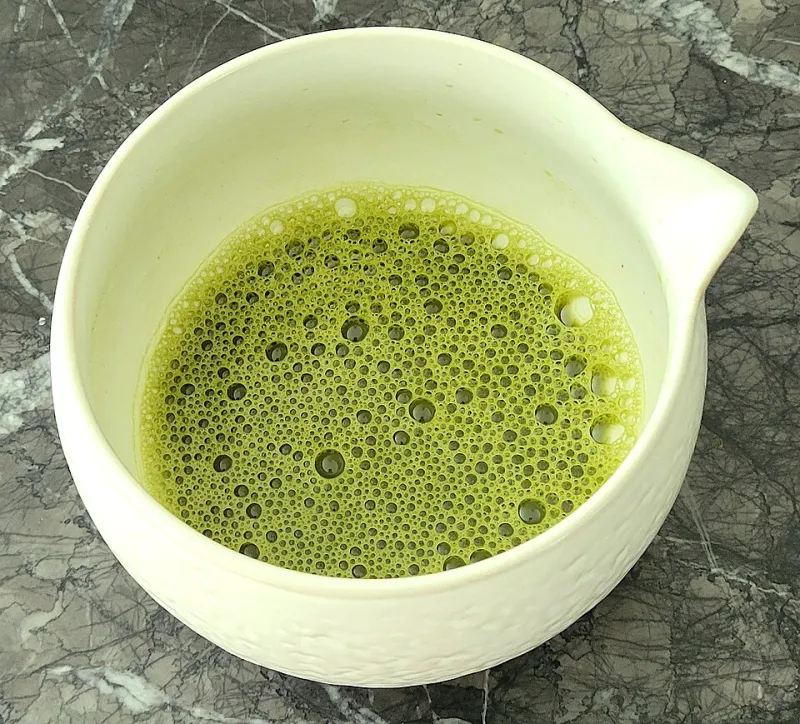
Photo: Pinnaclematcha, CC BY-SA 4.0, via Wikimedia Commons
Birmingham’s tap water is not a neutral ingredient. Most of it arrives from the Elan Valley in mid-Wales, and the journey ends in a supply that is notably soft: low in the dissolved calcium and magnesium that make water “hard” in other parts of England. For anyone brewing Japanese green tea at home, that is an advantage—but not an unconditional one. Soft water can make a bowl of matcha taste cleaner and a cup of sencha seem more fragrant; it can also make a careless infusion taste thin. The useful question is not whether Birmingham water is good, but how to work with it.
The water behind the kettle
Softness is a measure of mineral content. Birmingham’s supply is soft enough that kettles fur up slowly and soap lathers easily, and this is the same water that fills the kettle for tea. Japanese tea practice has long favoured soft water; the aim is a cup that tastes of leaf and season rather than of the ground. In that sense, Birmingham households begin with an enviable base. The caveat is treatment. Chlorine and the condition of domestic pipes can blur aroma, so if the water smells of the tap when drawn, filter it or let a jug stand for an hour before heating. Do not soften it further, and do not assume that bottled is better.
Soft, hard and the taste of a leaf
Hard water carries calcium and bicarbonate. In green tea it can mute perfume, leave a chalky finish and, with some teas, produce a scum on the surface. Bottled mineral waters vary enormously: some are low in minerals and pleasant for tea, others are hard enough to flatten a delicate sencha. Price is no guide. If you want a comparison, choose a softly mineral bottled water and a distinctly hard one, then taste the same tea made with Birmingham tap. The differences are usually clearest in the aroma and aftertaste rather than in the first sweet impression.
Soft water tends to extract brightly. A sencha that tastes balanced in Birmingham may seem lighter in a hard water, while a hard water may make the same leaf taste dull rather than strong. Matcha is especially revealing: because the leaf is suspended rather than infused, water quality shows up in texture as well as flavour. Soft water can give a clean, sweet bowl; very hard water can make the foam collapse and the finish feel gritty.
Adjusting temperature and leaf
Start with the tea, not the water. For sencha, a practical baseline is 4g of leaf to 200ml of water at 70–75C, infused for 60–75 seconds. With Birmingham tap, begin at the lower end of the leaf range and the middle of the temperature range. If the cup seems thin, add a little leaf before raising the temperature; if it turns bitter, shorten the infusion or cool the water. For matcha, sift 1.5g into a bowl, add about 70ml of water at 75–80C, and whisk to a fine foam. Soft water usually needs no correction here, though a bowl that tastes watery may want slightly more matcha rather than hotter water.
Hard bottled water calls for restraint. Do not boil it harder or steep longer in an attempt to recover the missing aroma. Choose a water low in bicarbonate if you can, keep the temperature gentle, and adjust leaf by half a gram at a time. The goal is not to make hard water behave like soft water; it is to find the best cup that particular water can give.
A simple tasting route
Set aside an hour and three small cups. Use the same tea, the same leaf weight, the same water temperature and the same infusion time. Label the cups A, B and C: Birmingham tap, filtered Birmingham tap, and a hard bottled water. Taste them warm, not hot, and write three notes for each—aroma, body, finish. Then repeat the test with the water you preferred, changing only one variable: half a gram more leaf, or five degrees cooler. This is not a laboratory experiment; it is a way of learning what your own kitchen does to a leaf.
The Birmingham kitchen
The equipment need not be elaborate: a kettle, a thermometer, a small jug and a fine sieve will do. Draw fresh water each time, heat it gently and avoid a long, rolling boil that drives off oxygen and makes green tea taste flat. If you live in a flat with a combi boiler, let the hot tap run cool before filling the kettle; if your water is heavily chlorinated, a simple filter is enough. The point is to treat water as an ingredient, not as a delivery system.
Birmingham’s soft supply is a quiet asset. It will not make a poor tea good, but it gives good tea a fair hearing. Once the water is understood, the adjustments become small and sensible: a little less leaf, a little less heat, a little more attention. The Elan Valley is a long way from the Midlands, but its softness is already in the cup.