Pavement, Canal, Park, Door: Five Birmingham Walks That End at the Tea Bowl
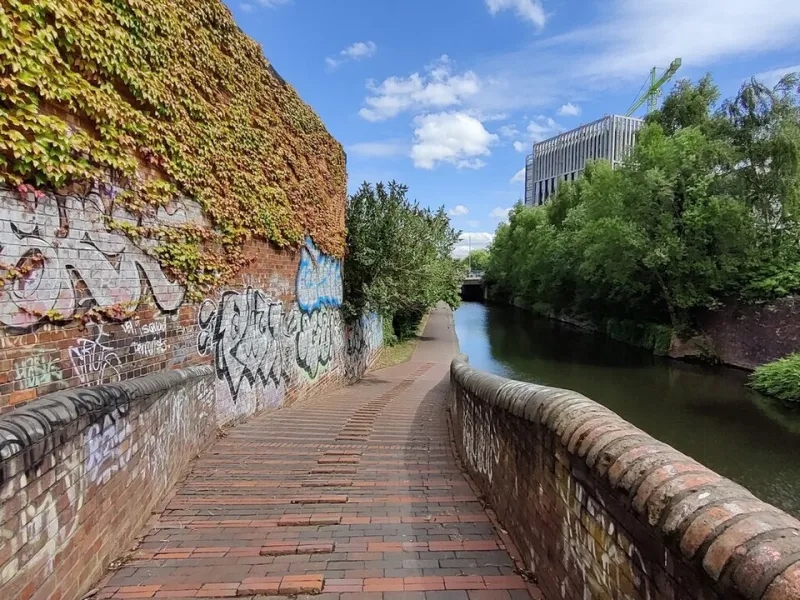
Photo: Mat Fascione , CC BY-SA 2.0, via Wikimedia Commons
There is a moment, ten or fifteen minutes before a tea gathering, when the guest who has arrived by car is still, in a small way, elsewhere. The engine idles in the memory; the traffic lights linger. The guest who has walked arrives differently. The body has done something simple and the mind has been given a task it understands. At Urasenke Birmingham we speak often of preparation, and it is worth remembering that preparation begins on the pavement, not at the threshold.
What follows is a local guide to five walks in and around the city that end, naturally and without fuss, at a bowl of tea — whether in a shared hall, a borrowed room, or at your own kitchen table. None is strenuous. All are suited to the deliberate pace that tea asks of us.
Before Setting Out: The Shape of a Good Approach
A walk before tea should be long enough to warm the body and short enough to leave it settled. Twenty to forty minutes is ample. Choose a route with a clear end, so that the final turn is not a scramble for a map but a small arrival. Carry little: a folded cloth for a damp bench, a small umbrella in the pocket, nothing that must be put down in the tea room with a clatter.
It is courteous to allow ten minutes at the door before the gathering begins. Coats are removed, hands washed, breath recovered. A guest who arrives pink-cheeked and hurried has given the host something to manage. A guest who arrives composed has given the host a room that is already calm.
Route One: Gas Street Basin to Edgbaston Reservoir
Begin at Gas Street Basin, where the Worcester and Birmingham Canal meets the older cut, and follow the towpath west. The city falls away quickly here; the water holds the light and the brick holds the noise. Continue past the Soho Loop and on towards Edgbaston Reservoir, where the path opens and the sky widens.
This is a route of roughly two miles and it rewards an unhurried pace. In winter the towpath can be slick with leaf-fall, and the reservoir path icy at the northern edge; boots with a tread are sensible. In summer the shade is intermittent, so a hat is wise. The walk ends well placed for a bowl of usucha, the thin tea that suits a body still carrying a little warmth from the pavement.
Route Two: Cannon Hill Park and the Rea Valley
From the gates of Cannon Hill Park, follow the Rea Valley path south, past Holders Lane and towards the green corridor that threads behind King's Heath. The route is level and generous, with trees enough to make the city feel distant and benches enough to make a pause possible.
This is the walk for a guest who wishes to think. The path is quiet on weekday mornings, busier at weekends, and in May the blossom is reason enough on its own. Autumn is the season that suits it best: the ground is dry more often than not, and the light through the trees is the colour of roasted barley. A sencha, brewed a little cooler than you might think, follows this walk well.
Route Three: Bournville's Green Lanes
Bournville is not a secret, but its quieter lanes still surprise visitors. Begin near Rowheath Pavilion and take the footpaths that lead through Valley Parkway and towards Bournville Green, where the Bourn runs shallow and the trees are old. The route can be extended or shortened at will, which makes it useful for a guest who is unsure how much time they have.
Much of this walk is on pavement and metalled path, so it is a sensible choice in wet weather. The gentle rise towards the green is enough to lift the heart rate without requiring a change of clothes. On a cold morning, this is a route that asks for hōjicha at the end of it: the roasted leaf, low in bitterness, is a kindly thing to drink when the fingers are still remembering the air.
Route Four: Sutton Park, by Bracebridge Pool
For those willing to travel a little further from the centre, Sutton Park offers something the city cannot: heathland, water and a horizon. A short circuit from the Bracebridge Road entrance, taking in Bracebridge Pool and returning by Longmoor, is about an hour at a guest's pace and rather less at a brisk one.
The ground here is uneven in places and can hold water after rain, so stout shoes are not an affectation. In autumn the bracken turns and the park is at its most beautiful; in high summer the pools are busy and the walk is best taken early. This is the route for a longer gathering, or for a guest who intends to serve matcha at home afterwards. The appetite that a heathland walk produces is well met by the thick tea, taken slowly, with a single sweet thing beforehand.
Route Five: The Jewellery Quarter to St Paul's Square
For a short approach in the city itself, begin among the workshops of the Jewellery Quarter and walk the few streets to St Paul's Square, then on to the canal at the edge of the square and along to the Mailbox. Fifteen or twenty minutes, no more, but enough to change the register of the day.
This is the route for a winter evening gathering, when the lamps are lit and the pavements are bright with cold. It is also the most sociable of the five: there is always something to notice, a window, a doorway, a sign painted a century ago. A guest who walks this route arrives with the city still about them, which is no bad thing when the tea room is only a room.
Matching the Walk to the Tea
A short urban walk suits usucha, served briskly and drunk while it is still hot. A longer park walk suits sencha, which can be brewed in quantity and shared without ceremony. A cold-weather walk asks for hōjicha or a bowl of matcha, both of which warm the hands as much as the throat. A summer walk, taken in the shade, is pleasantly answered by a cooled sencha or a light gyokuro, served in a glass and taken without haste.
What matters is not the pairing but the proportion. A walk that leaves you breathless is too long for a tea that asks you to sit still. A walk that leaves you cold is too short for a tea that asks you to linger. The right walk ends with the body warm and the mind quiet, which is the condition tea has always preferred.
Seasonal Notes
In winter, choose routes with pavement or towpath and finish before dark. In spring, take the park routes and look for the first blossom. In summer, walk early or in the evening and carry water. In autumn, avoid the leaf-slick corners and allow an extra ten minutes. The city is generous in all four seasons, provided the guest is prepared for the one that is actually happening.
Coming In
At the door, pause. Fold the umbrella, wipe the shoes, and let the walk end where it should. The tea room does not ask you to forget the pavement; it asks you to set it down. A bowl of tea after a good walk is not a reward, exactly. It is a continuation, taken sitting down.