A Companion at the Gate: Bringing a First-Time Guest to Birmingham Tea
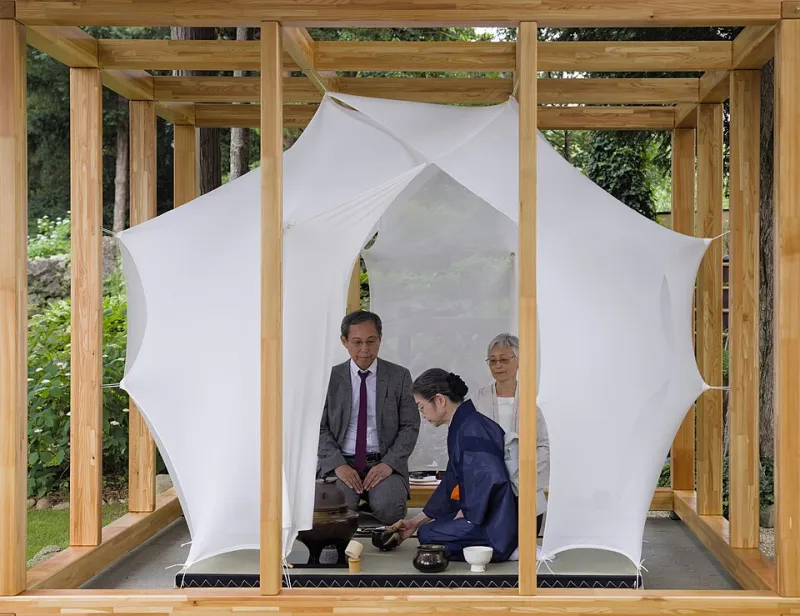
Photo: D-Kuru, CC BY-SA 4.0, via Wikimedia Commons
A tea gathering in Birmingham is rarely a large affair. It may take place in a community hall, a borrowed room, or a modest studio where the number of cushions, bowls, and kettlefuls of water has been calculated in advance. For this reason, the question of bringing a companion deserves thoughtful handling. The wish to share an experience is entirely natural, yet the plus-one is not simply an extra chair. They are a new presence in a room arranged for attentiveness, and their introduction should be managed with the same care that governs the rest of the occasion.
Ask Before You Assume
The first principle is simple: an invitation to you is not automatically an invitation to another. When you receive word of a gathering, make your enquiry early and make it plainly. Explain who you would like to bring, what relationship they have to you, and whether they have any previous experience of Japanese tea. The host may welcome the request at once, or may need to consider space, utensils, and the balance of the room. A gathering for six may become strained at seven; a small tea room may have no comfortable place for an additional guest who needs a chair rather than a cushion.
It is helpful to offer the host an easy refusal. A sentence such as 'I quite understand if this is not possible' costs little and preserves good feeling. If the answer is no, accept it without pressing the matter. The host is not withholding hospitality; they are protecting the quality of hospitality for everyone present. In the same way, do not arrive with an unannounced companion and expect the room to accommodate them. The threshold is not the place for negotiation.
What Your Guest Needs to Know
Once permission has been given, the task is preparation rather than instruction. A first-time guest does not need a lecture on tea history, the names of utensils, or the finer points of bowing. They need practical information, delivered briefly and without alarm. Tell them when to arrive, where the entrance is, and how they might travel by bus or train. Mention whether shoes will be removed and whether warm socks or a change of footwear would be sensible in a Midlands winter. Note that telephones should be silent and out of sight, and that perfume or strongly scented hand cream is best avoided in a small room.
Beyond this, explain the atmosphere rather than the rules. Say that there will be periods of quiet, that the host will guide the gathering, and that no one expects the newcomer to know the order of events. A sentence such as 'You are welcome simply to watch and to accept what is offered' is more useful than a summary of ceremonial procedure. If your guest has dietary requirements, mobility needs, or a hearing difficulty, pass this information to the host in advance. Do not leave such matters to be discovered at the door.
The Bridge, Not the Instructor
Your own role is delicate. You are a bridge between host and guest, not a commentator. Sit where the host places you, and allow the gathering to unfold at its own pace. If your companion glances at you for reassurance, a small nod or a quiet gesture may be enough. Resist the urge to whisper explanations throughout the proceedings. Constant commentary divides attention and disturbs the room. It also implies that the newcomer cannot understand anything without your intervention, which is seldom true and rarely kind.
Should your guest make a mistake, do not correct them across the tatami. A misplaced hand or an uncertain bow is not a crisis. The host will usually guide the next movement, and the guest will follow. If a question arises, answer it briefly and quietly, or reserve it for the journey home. The aim is not to produce a flawless performer but to allow a newcomer to be present with dignity.
Seating and Serving Considerations
The host may adjust the seating to accommodate your guest. This is not a slight to the original arrangement but a sign of care. A guest who uses a walking stick, who is hard of hearing, or who finds floor sitting difficult may be given a chair or a place near the edge of the room. Accept such adjustments graciously. If you know that your companion will need extra space, mention it beforehand so that the room can be prepared rather than rearranged in the moment.
Serving also calls for sensitivity. The host may offer a smaller portion of sweets or a different bowl, and your guest should feel free to accept what is given without apology. If a dietary requirement has been communicated, trust the host to have considered it. Do not bring your own food or drink unless this has been agreed in advance. A tea gathering is not a picnic, and the introduction of outside provisions can unsettle the host's careful sequence.
Keeping the Quiet Rhythm
A newcomer may be nervous, and nervousness can express itself as chatter. Before the gathering, gently remind your companion that silence is part of the occasion rather than a sign of disapproval. Explain that pauses are not awkward gaps to be filled. If they forget, a discreet glance or a hand resting briefly on the arm may serve better than a spoken reminder. At the same time, do not police them. A single quiet word after the gathering is enough.
It is also worth agreeing, before you arrive, how you will leave. Some guests may find an hour of stillness tiring; others may wish to linger. The considerate departure applies to companions as much as to anyone else. Thank the host, gather your belongings without bustle, and step away from the room before beginning a fuller conversation.
After the Gathering
On the way home, allow your guest to speak first. They may have noticed entirely different things from you: the sound of water, the pattern of a bowl, the behaviour of another guest. Listen without turning the journey into a seminar. If they ask about something you do not know, say so. The point of introducing someone to tea is not to make them an expert in a single afternoon, but to offer a genuine encounter with a quiet and hospitable tradition. Later, if photographs were taken, ask before sharing any image in which your guest appears. A gathering is a small trust, and it should not become public material without consent.
At Urasenke Birmingham, the plus-one is always a welcome possibility, provided the room can hold them well. The test is not whether a newcomer knows the forms, but whether host and guest alike can attend to one another with patience. A companion brought with consideration becomes part of that attention rather than a distraction from it.