A Clear Line of Sight: Welcoming Deaf and Hard-of-Hearing Guests to a Birmingham Tea Gathering
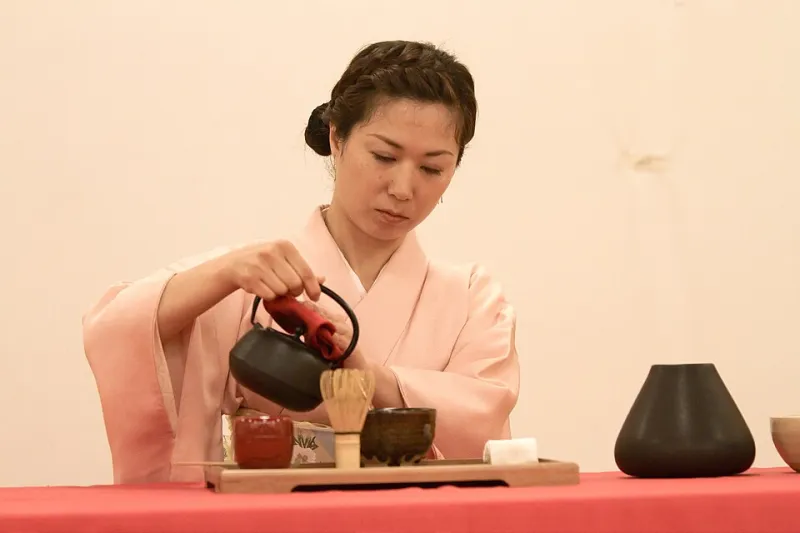
Photo: Georges Seguin (Okki), CC BY-SA 3.0, via Wikimedia Commons
Tea ceremony in Birmingham is often described in terms of what is withheld: no unnecessary speech, no hurried movement, no excess. For a Deaf or hard-of-hearing guest, however, a room that withholds too much can become difficult to enter. The quietness that gives the ceremony its character must be distinguished from a lack of information. The host’s task is not to make the gathering louder, but to make its sequence clearer.
At Urasenke Birmingham, we prefer to begin with a conversation rather than a checklist. Inclusion in a small tea room is rarely achieved by a single adaptation. It is achieved by attention: to where a guest is seated, to what the light is doing, to how a transition is signalled, and to the difference between atmosphere and ambiguity.
Beginning with the Room
Before the gathering, ask the guest what would help. Some Deaf guests use British Sign Language and may wish to arrange an interpreter; others lip-read, use hearing aids, or prefer written notes. A brief email or telephone conversation, handled with discretion, can establish preferences without turning the guest into a subject of discussion. Offer a short outline of the ceremony in advance: the order of the gathering, the names of the utensils, and the points at which conversation is likely. This is not a transcript of the ceremony. It is a map.
A named contact for the day is also useful. A guest should know whom to approach on arrival and where to sit. In a shared hall or a borrowed room, the host should arrive early enough to arrange the space before others begin to settle.
Seating and Sightlines
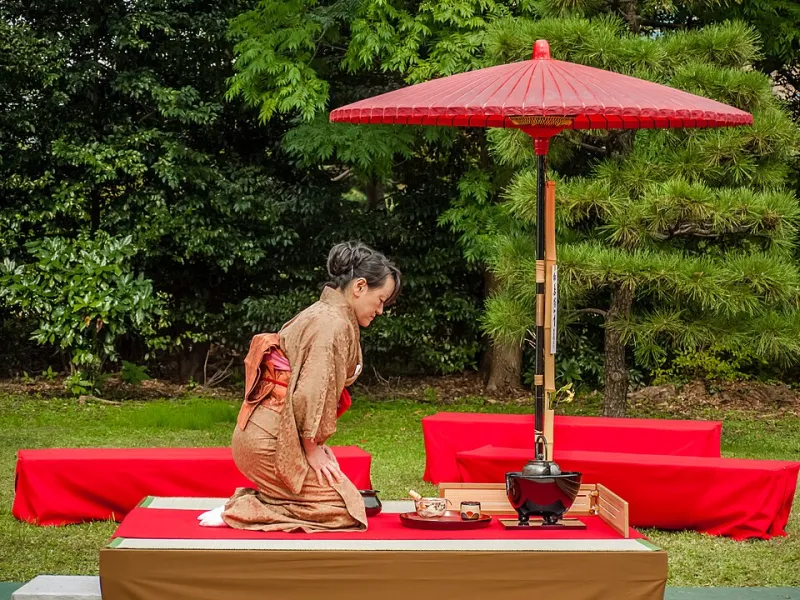
The guest’s seat should offer a clear view of the host’s hands and of the principal utensils. In practice, this usually means a position slightly to the side of the central axis rather than directly opposite the host, where the tea bowl may obscure the hands. A shallow arc is often better than a straight line: it allows the guest to see both the host and the other guests without turning constantly.
Check the sightline from the guest’s chair, not from the host’s. Sit there. Look toward the tea preparation area. Is the view blocked by a standing screen, a flower vase, or the shoulder of another guest? When serving, avoid passing items across the guest’s line of sight. If the room is small, keep the floor between host and guest uncluttered; a folded cloth or a low stand can be moved aside without fuss.
For conversation before and after the ceremony, a seat that allows the guest to see several faces is helpful. Lip-reading is tiring in a group, and a curved arrangement reduces the need to swivel. The host should also avoid sitting with a bright window behind them, which turns the face into a silhouette.
Light, Colour and Contrast
Lighting is the most overlooked element of a welcoming tea room. Strong backlight from a window may look beautiful, but it can obscure the host’s expression and the movement of the hands. Diffused side light is preferable. If the room has only a harsh overhead light, a small floor lamp or a shaded table lamp can soften the scene without destroying its quietness.
Avoid flickering candles near the guest’s field of view. A steady flame is atmospheric; a restless one is a distraction. Contrast also matters. Pale utensils on a pale cloth can disappear; a dark tray or a coloured cloth beneath the tea bowl can make the sequence easier to follow. This need not be elaborate. A simple linen cloth in a muted colour, chosen with the room’s usual restraint, is enough.
A Sequence Made Visible
A tea gathering has a rhythm. The host cleans, arranges, whisking follows, the bowl is offered, and the guest responds. For a guest who cannot rely on sound, these transitions can be made visible without turning the ceremony into a demonstration. The key is consistency.
The host can use a small, discreet sequence card: a folded card on a low stand, with plain words or simple line drawings for the main stages. It should not be read during the ceremony, but it gives the guest a place to rest the eyes and confirm what is happening. Alternatively, the host may agree a few simple visual cues in advance: an open palm to indicate that the bowl is being offered, a slight bow before a change of pace, a hand resting on the utensil that is about to be used.
These cues should be quiet and repeatable. A guest who knows that the host will always bow before lifting the kettle, or always turn the bowl before offering it, can follow the gathering without needing to ask. Consistency is more valuable than invention.
Speech, Sign and Written Notes
When speaking to a Deaf or hard-of-hearing guest, face them directly. Do not cover your mouth. Speak at a normal pace and volume rather than exaggerating, which distorts lip patterns. If an interpreter is present, speak to the guest, not to the interpreter, and allow time for interpretation. Position the interpreter where the guest can see both the interpreter and the ceremony; often this means placing them to the side of the host rather than in front of the utensils.
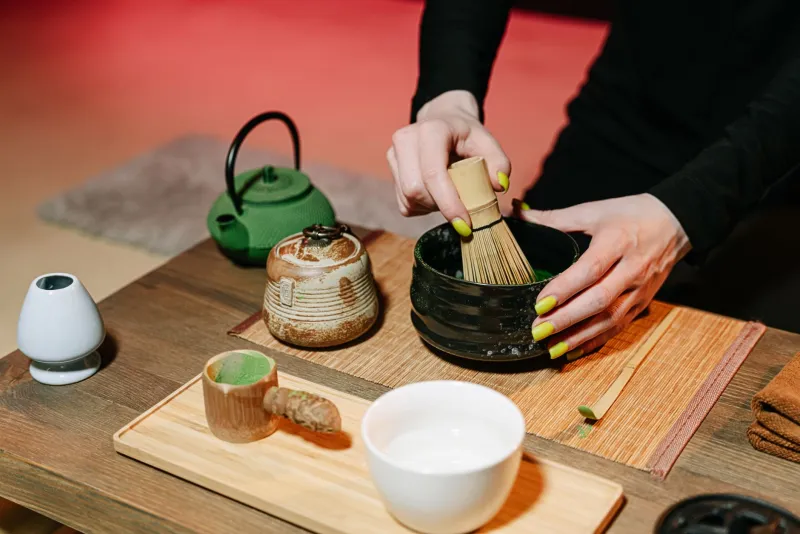
Written notes are useful for names, tea terms, and the order of the gathering. Keep them brief and in plain English. A short glossary of terms such as chawan, chasen and chashaku can be sent beforehand, with a note that the guest need not memorise anything. The aim is not to test knowledge, but to remove the small uncertainties that can make a room feel closed.
Sound as Description, Not Dependence
The ceremony is full of sounds: water in the kettle, the whisk against the bowl, the slip of a cloth. These sounds are part of the atmosphere, but they should not be the only carriers of information. The host can describe a sound briefly, or mention what is about to happen, without narrating every movement. A single sentence before the whisking begins may be enough. Silence can then return.
The guest should not be made to feel that the ceremony is being explained for their benefit alone. A short pre-visit outline and a few well-chosen cues allow the gathering to remain shared rather than special.
The Host’s Quiet Rehearsal
Before the day, walk through the sequence from the guest’s seat. Ask a friend to sit there while you prepare tea. Check the light at the hour of the gathering, not an hour earlier. Make sure the written card is legible without being conspicuous. Rehearse the cues until they feel natural, then set them aside. The best adaptations are the ones that do not announce themselves.
A Shared Room, Not a Special Case
The inclusive alcove is not a separate corner of the tea room. It is the ordinary room, seen from a different chair. Birmingham’s tea gatherings take place in halls, studios, and borrowed rooms of varying shapes, and no single arrangement will suit every space. But the principle holds: the host should look from the guest’s seat, listen with the eyes, and remove the barriers that need not be there. The ceremony can remain quiet. It need not remain unclear.