One Stem, One Season: The Chabana Alcove in a Birmingham Tea Room

Photo: simple chabana seasonal flower arrangement Japanese tea room alcove single stem, via www.creativefabrica.com
Chabana is often described as the flower of tea, but the phrase can mislead. It is not a floral decoration added to a room, nor a smaller version of an ikebana display. In the tea room, a single stem or a modest pair of stems is placed in the alcove to mark the season and to give the gathering a point of quiet attention. The arrangement should seem almost accidental, as though the flower has merely been brought in from the garden and set down. In Birmingham, where tea gatherings often take place in compact rooms, shared spaces, or homes with a north-facing window, this restraint is not a limitation. It is a useful discipline.
The alcove as a quiet interlocutor
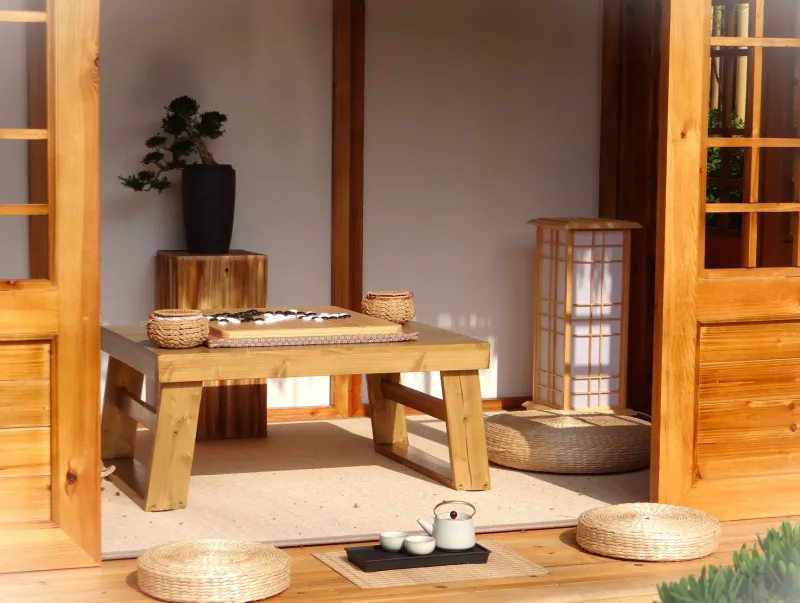
The alcove, or tokonoma where one is present, is not a stage. It is a place of pause. A guest arriving in the tea room may bow towards it, sit before it, or simply notice it in passing. The flower does not need to fill the space. Indeed, it should leave space around itself, allowing the wall, the vessel, and the light to take part. A Birmingham host working with a modest chimney breast, a shelf, or a corner screened by a hanging scroll can apply the same principle: one clear area, one seasonal presence, and no competition from clutter.
Chabana differs from more formal floral arts in its deliberate lack of polish. Stems may lean. A leaf may be marked. A bud may be preferred to a fully open bloom. The aim is not to correct nature but to receive it. This is why the flower should look as if it has just come in from the garden, not as if it has been persuaded into a shape.
Restraint before arrangement
Before choosing a flower, the host considers the season, the occasion, and the room. A midday gathering in early spring calls for something different from a wet November evening, though the difference may be subtle. The flower should not overpower the tea utensils, nor should its scent compete with incense or the aroma of matcha. Strongly fragrant flowers are generally avoided in the tea room, as are blooms that shed heavily or wilt within hours.
A useful rule is to begin with one stem. If a second is added, it should answer the first rather than repeat it: a bud with an open flower, a blade of grass with a slender branch, a small berry with a bare twig. The vessel should be simple and unobtrusive, with enough water to keep the stem fresh and enough room for the flower to stand naturally. The host should avoid fussing once the arrangement is in place. In tea, the flower is not a performance, and the arranger should not become one either.
Sourcing in and around Birmingham
Birmingham and the surrounding Midlands offer more than enough for chabana, provided the host looks locally and seasonally. Gardens, allotments, and modest yards are often the best sources: a sprig of flowering quince, a single hellebore, a stem of lady's mantle after rain. Local florists and farmers' markets can supply good material, though the host should choose with the tea room in mind rather than with a bouquet in mind. A market bunch may be too abundant for chabana, but one stem taken from it can be exactly right.
When gathering from a garden or allotment, permission is essential. Wild picking should be avoided unless the landowner or local authority has given clear consent, and even then only where plants are abundant. In Birmingham, parks and nature reserves are not sources of tea flowers. The considerate host takes a little, leaves the plant healthy, and avoids damaging hedges or borders. A clean pair of scissors, a small container of water, and a cool journey home will do more for the flower than elaborate conditioning.
A Birmingham year in stems
The following examples are not a checklist but a way of thinking seasonally. Birmingham's climate is mild and often damp, which suits many garden plants, but the host should always use what is actually available and in good condition.
In spring, consider hellebore, daffodil, flowering quince, plum or cherry blossom, pulmonaria, and the first slender leaves of the year. A single daffodil can be too strong in colour for a small room, so a half-open bud or a quieter variety may be preferable. In summer, campanula, nigella, lavender used sparingly, lady's mantle, grasses, and small hydrangea florets can serve. The host should avoid heavy-headed blooms that demand attention. In autumn, Japanese anemone, sedum, seed heads, cotoneaster berries, and weathered grasses suit the grey light. In winter, camellia, witch hazel, winter jasmine, ivy, and bare twigs carry the room through the coldest weeks. A single camellia bud in January can say more than a full vase.
Vessels, water, and the room's climate
The vessel should be chosen after the flower, not before. A tall, narrow vase may support a single stem; a shallow dish may suit a low branch; a bamboo tube may be appropriate for a informal gathering. Whatever the vessel, it should be clean and filled with fresh water. Birmingham's water is generally soft, which is kind to both flowers and tea, but the water should still be changed daily in warm weather.
Placement matters. The alcove or display area should be out of direct sun and away from radiators. In a small Birmingham flat, a shelf near a window may be the only option, but the host can shield the flower from harsh light with a screen or simply choose a cooler position. The flower should not block a guest's view of the room, nor should it be placed where it will be knocked. A little forethought is part of the hospitality.
The etiquette of arranging and receiving
The host arranges the flower before the guests arrive. This is not a secret, but it is not a demonstration. If a guest arrives early and sees the host at work, a brief explanation is enough; the host should not feel obliged to deliver a lecture on aesthetics. The arrangement should be finished, the cuttings cleared away, and the water topped up before the gathering begins.
Guests, in turn, receive the flower quietly. They may bow towards the alcove, look for a moment, and offer a simple remark if it seems natural. They should not touch the stem, move the vessel, or ask a series of questions about its name and cultivation. In a formal tea gathering, the first guest may ask about the flower, and the host may answer briefly. Beyond that, the flower is allowed to remain a flower. Excessive praise can be as uncomfortable as indifference.
A small stem in a small room
Chabana is particularly well suited to Birmingham's smaller tea rooms. It does not require a garden, a large alcove, or a specialist supplier. It requires attention: to the season, to the room, and to the guests who will see it. A single stem, chosen with care and placed without fuss, can give a gathering its quiet centre. In a city of diverse gardens, markets, and borrowed corners, that is a generous and practical art.