A Lens at the Threshold: Photographing Tea with Courtesy in Birmingham
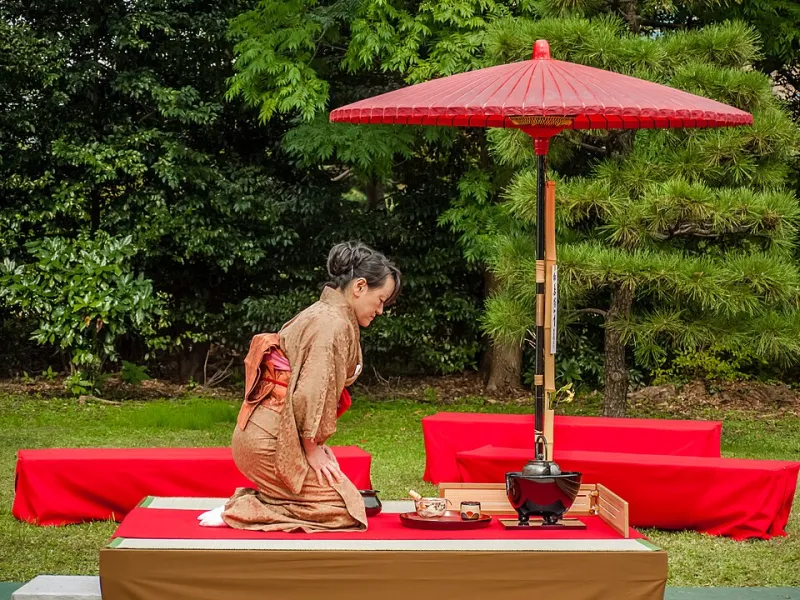
Photo: Ermell, CC BY-SA 4.0, via Wikimedia Commons
A tea gathering is not a performance staged for an audience, nor is it a private ceremony that must exclude every trace of modern life. In Birmingham, where Urasenke gatherings are often held in shared halls, community rooms, and borrowed spaces, the camera sits somewhere between these two poles. It may be welcome, tolerated, or entirely out of place. The difference lies less in the equipment than in the manner of its use.
Ask Before the Room Is Set
Photography begins before the first guest arrives. A question asked at the threshold, with coat still on and phone already lifted, places the host in an awkward position. It is kinder to raise the matter when accepting the invitation, or in a brief message beforehand: may photographs be taken at this gathering, and if so, at which points? The host can then consider the room, the other guests, and the shape of the occasion without an expectant lens waiting at the door.
It is equally helpful to ask what may be photographed. The alcove and its flower may be offered for a quiet record; the utensils may be less so. A group photograph after the gathering may be welcome, while images of individual guests, hands, or faces may not be. If the host hesitates, the courteous response is to accept the hesitation as an answer. A camera put away without complaint is a small gift to the room.
The Difference Between Record and Ritual
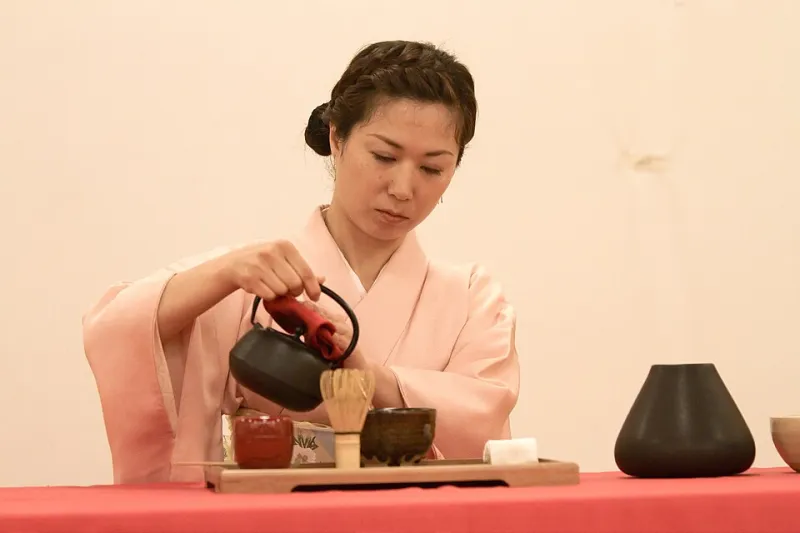
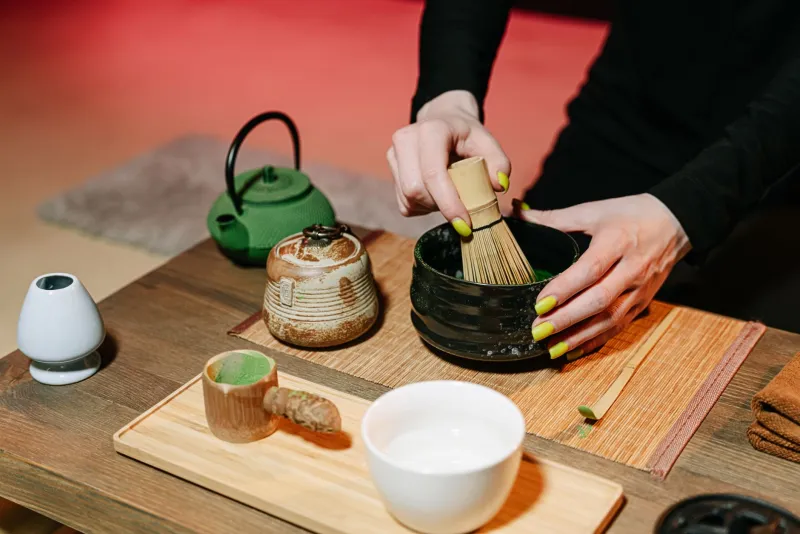
Tea ceremony has its own rhythm, and that rhythm is easily broken by the small mechanics of a telephone: the screen brightening, the shutter clicking, the photographer leaning to check a frame. Even a silent device changes the attention of the person holding it. For that reason, the safest moments for photography are usually before the guests enter or after the bowls have been returned. The making of tea is not a photo opportunity; it is the reason for gathering.
Where a host permits photography during the ceremony, restraint should govern every choice. Flash is rarely appropriate. It alters the colour of the tea and the texture of the bowl, and it announces the photographer more loudly than any shutter. Screen brightness should be lowered, notifications silenced, and images left unreviewed until the gathering has closed. A photograph taken at the wrong moment is not merely intrusive; it teaches the photographer to watch the ceremony as a series of potential images rather than a continuous act of attention.
Low Light, Shared Tables, and the Birmingham Hall
Birmingham halls present their own conditions. High ceilings, mixed fluorescent strips, tall windows, and the grey light of a Midlands afternoon seldom combine into a studio. This is not a defect to be corrected with flash or by rearranging lamps. If a room is dim, the considerate photographer accepts a little grain or blur, or accepts that no photograph is needed. Moving furniture, opening curtains, or standing on a chair to improve the light would alter the gathering itself.
Communal tables require particular care. A phone held above a bowl can block the view of three other guests. A photographer who leans across the table to frame a plate of wagashi may also lean across someone else's quiet. Keep the device close to the body, remain seated where possible, and avoid standing over utensils or between guests and the alcove. In a shared hall, the tea room's atmosphere is made by restraint as much as by arrangement.
A Small Protocol for the Pocket
A few simple habits make photography easier to conduct with courtesy. Set the phone to silent and lower the screen brightness before entering the room. Ask once, clearly, and do not renew the request through the gathering. Choose one or two frames rather than a prolonged session. Do not photograph other guests without their consent, and do not publish images of a gathering without the host's permission. If a group photograph is taken afterwards, let it be brief and let it include only those who wish to be included.
Above all, keep the camera from becoming a second host. It should not direct people, delay the serving of tea, or turn a quiet interval into a waiting period. If you are uncertain whether a photograph is appropriate, leave the phone in your bag. The bag by the wall is often the most courteous camera position in the room.
When the Bowl Is Better Remembered
There is a particular kind of photograph that tea does not need: the close-up taken to prove attendance. A bowl is not diminished by going unrecorded. Its weight in the hand, the warmth at the rim, the slight change in the tea's surface as it is lifted: these are not easily captured, and the attempt can distract from the very attention that makes them memorable.
This is a gentle opinion rather than a rule. Photographs can serve tea well when they are offered with permission and taken with care. They can help a host remember a gathering, or allow a guest to return to the shape of a flower after the room has been cleared. But some bowls are best remembered rather than captured. In Birmingham, where rooms are borrowed and light is seldom ideal, this is practical as well as principled. The most courteous camera is often the one that remains unused.