A Grammar of Steam: Judging Water Temperature by Sound and Sight in Birmingham
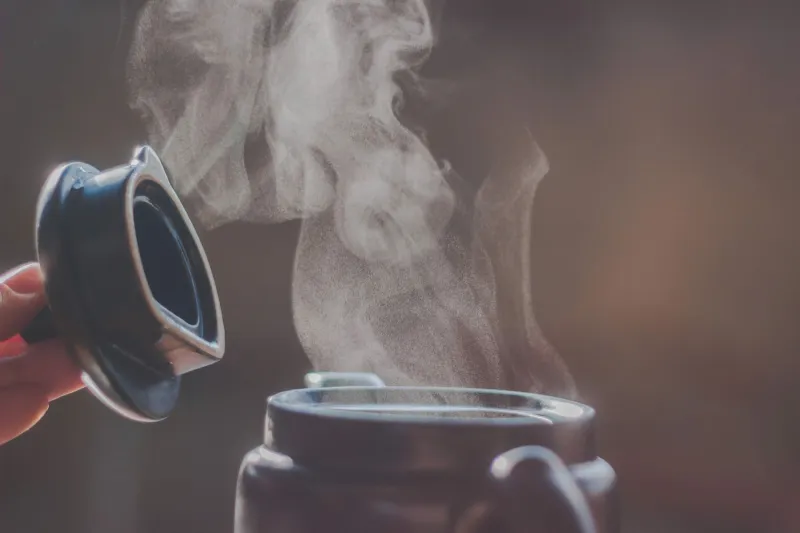
At a kitchen table in Birmingham, the kettle is often the first sound of the morning. It begins as a faint tremor, rises to a murmur, and finishes in a broad roll of steam. For most cups of everyday tea, that sequence is merely background noise. For Japanese tea, it is useful information. Water temperature shapes extraction, aroma, and texture, and the kettle offers a continuous report on the water within it. A thermometer remains the most reliable instrument, but listening and looking are part of the practice of tea: they cultivate the attention that ceremony asks of host and guest alike.
Why the water matters
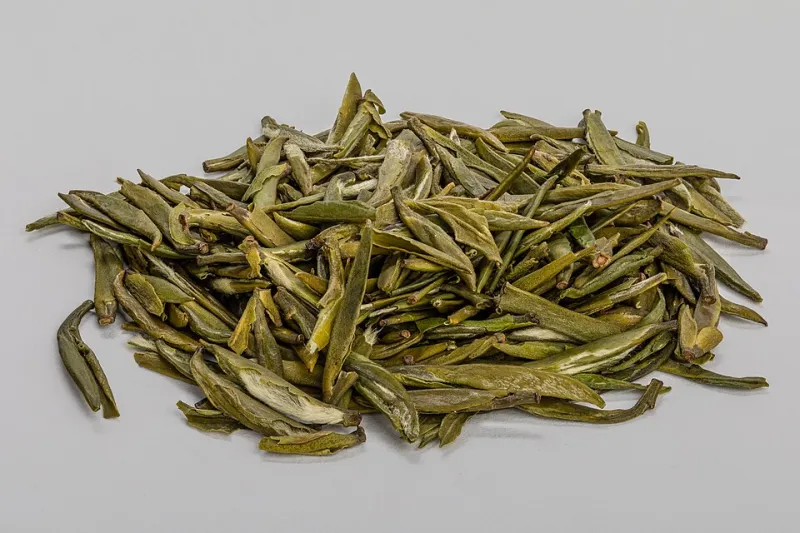
Japanese teas are not brewed by a single formula. Sencha generally prefers water that has cooled well below boiling, so that its green freshness and gentle umami are drawn out without bitterness. Matcha is whisked with water that is hot but not fierce, allowing the powder to disperse while preserving a smooth, sweet edge. Hōjicha, made from roasted leaves, is more tolerant of heat and often benefits from water close to boiling, which draws out its nutty, toasted character. The same kettle can serve all three, but only if the cook pays attention to the stage of heating rather than treating every boil as identical.
In a British kitchen, the electric kettle is the usual starting point. Most models hide the water behind a lid and switch off at a rolling boil, which makes direct observation difficult. A variable-temperature kettle is convenient, though it can become a substitute for attention rather than an aid to it. A stovetop kettle, or a simple pan with a spout, offers more visible and audible cues. None of these is essential. The essential thing is to notice what the water is doing before it is poured.
The first voice: the quiet gathering
Before the water boils, small bubbles gather at the base and sides of the vessel. The sound is a low, papery whisper, sometimes described as a soft hiss. Steam has not yet begun to rise in earnest. This is the stage at which water is warming through, and it corresponds broadly to the lower range wanted for delicate sencha. The exact temperature will vary with the kettle, the volume of water, and the kitchen's own climate, but the first voice is a useful signal that the water is no longer cold and has not yet become aggressive.
For a Birmingham kitchen, this stage is easiest to observe with a stovetop kettle or a glass vessel. If using an electric kettle, one may lift the lid briefly and listen, taking care to avoid steam. The exercise is not to guess a precise number but to learn the difference between water that is merely warm and water that is beginning to move. A single calibration with a thermometer can be helpful: note the reading at the moment the first faint bubbles appear, then repeat on another day. The kettle will teach a consistent grammar, even if its vocabulary differs from another model.
The second voice: the rising murmur
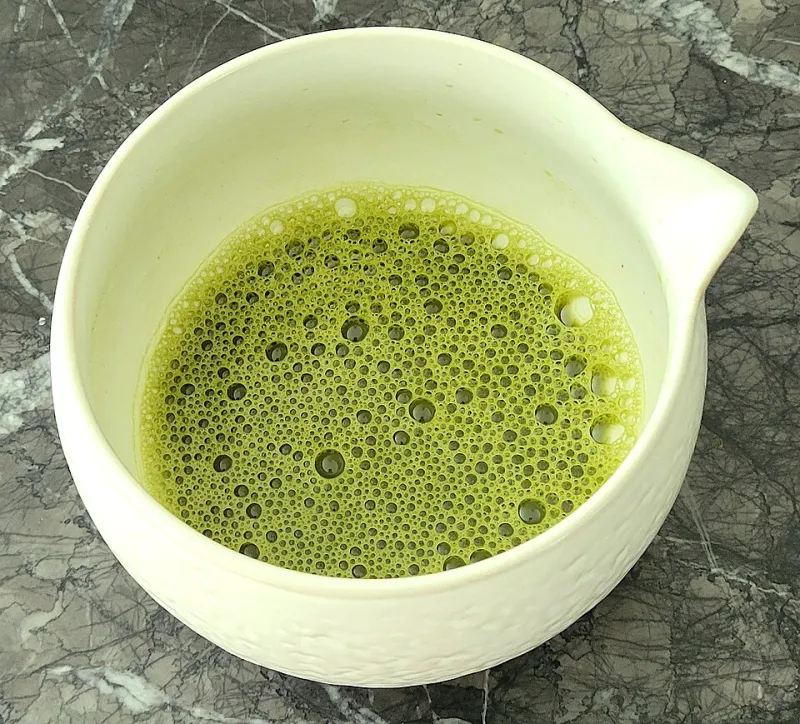
As heating continues, the bubbles grow larger and rise more quickly. The sound becomes a steady murmur, and a thin veil of steam may appear at the spout. This is the middle stage, suitable for matcha and for many sencha preparations that benefit from slightly warmer water. The water is not yet at a full boil, but it has acquired enough heat to whisk matcha into a smooth foam and to open the leaves of a robust sencha without scorching them.
At this point, the practical cook has a choice. One may pour the water into a cooling vessel, such as a yuzamashi or a small jug, and allow it to settle for a moment. In a British kitchen, a clean measuring jug works perfectly well. The act of pouring exposes the water to air and lowers its temperature gently. This is also a moment of pause: the kettle has done its work, and the tea equipment can be arranged without haste. For matcha, the bowl and whisk should be ready; for sencha, the teapot should be warmed and the leaves measured. The second voice is a reminder that preparation and heating are not separate tasks.
The third voice: the full roll
The third voice is unmistakable. The water rolls, steam rises in a steady plume, and the kettle or pan becomes lively. This is the range for hōjicha, whose roasted leaves can withstand and often welcome water close to boiling. It is also the stage at which many British kettles switch themselves off. For hōjicha, that is convenient. For sencha and matcha, it is a signal to cool the water before it meets the leaves.
There is a temptation to treat the full roll as the only proper boil and every earlier stage as incomplete. In tea practice, the opposite is often true. The full roll is a tool for certain teas, not a universal standard. Water that is too hot can make sencha sharp and matcha coarse. Hōjicha, by contrast, can seem thin when brewed with water that is too cool. The kettle's three voices are not a hierarchy but a set of options.
A listening exercise for a Midlands kitchen
Choose a quiet morning and fill the kettle with the same volume of water you would use for a pot of tea. Begin with cold water and stand at a safe distance. Listen for three moments: the first faint tremor, the first steady murmur, and the full roll. Note how long each stage takes. Repeat the exercise on another day, perhaps with a different kettle or a different volume of water. If you have a thermometer, use it once to calibrate your ear, then put it away.
The exercise is especially useful in winter, when Birmingham kitchens are cold and the kettle's sounds seem sharper. It is also a way to notice the condition of the kettle itself. A heavily scaled electric kettle may sound different from a new one, and a stovetop kettle on a gas flame will behave differently from one on an induction hob. These variations are not obstacles; they are part of the local grammar of the kitchen.
From kettle to bowl
Once the water has reached the desired stage, the remaining work is one of transfer and restraint. Pour sencha water into a warmed teapot and steep briefly. Whisk matcha with measured water, using a gentle but steady motion. Steep hōjicha for a short time, lest its roasted notes become woody. In each case, the kettle's voices have prepared the way, but the tea itself determines the final pace.
The practice is not to turn every cup into a ceremony. It is to bring a little ceremony into the ordinary act of boiling water. In a Birmingham kitchen, with rain at the window and a kettle on the counter, that is enough. The water has spoken; the host has listened; the tea can begin.