Hand Before Eye: A Birmingham Buyer’s Guide to the First Chawan
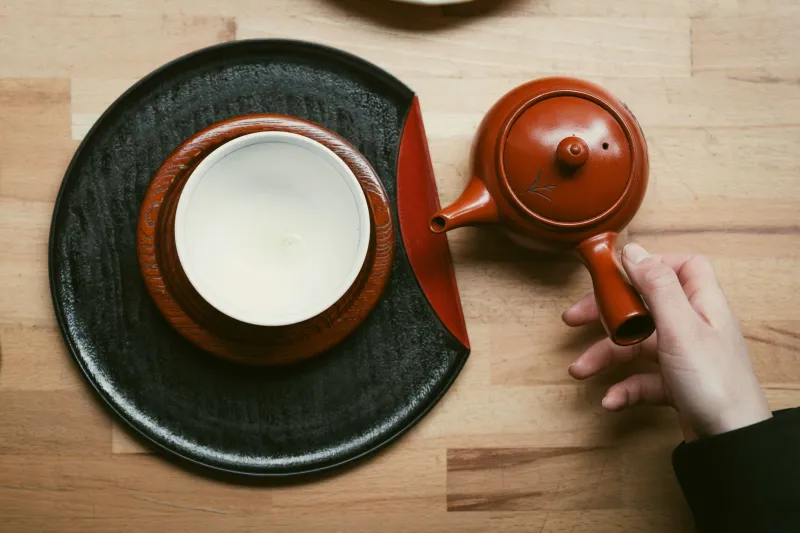
A first chawan is not a mantelpiece ornament. In the tea room it is a working vessel, lifted, turned, warmed, wiped and returned to its place with care. That practical life begins long before the first bowl of matcha is whisked. For anyone in Birmingham preparing to buy a first tea bowl, the useful question is not simply whether it looks beautiful on a shelf, but whether it belongs in the hand and behaves well on a tray.
Begin with the hand, not the display
It is natural for a first purchase to start with sight. A glaze catches the light in a gallery window, or a photograph online suggests a certain quiet charm. Yet a chawan must be held before it can be understood. In a specialist shop or potter’s studio, ask to handle the bowl. Hold it with both hands, as one would in the tea room. Consider its weight when empty and the way its balance shifts if it is half-filled with water. A bowl that feels clumsy at the outset rarely becomes elegant through familiarity.
Size matters, but there is no single correct dimension for every person. A diameter that suits a taller guest may sit awkwardly in smaller hands. A deep bowl may feel secure, while a shallow one may bring the tea closer to the lip. The rim should be comfortable and free from roughness. The bowl should sit steadily on the palm without demanding a tight grip. If the seller permits, place a little warm water inside; this simple test reveals whether the bowl becomes slippery, whether the foot sits level, and whether the whole vessel feels agreeable when used rather than merely admired.
Reading the glaze with use in mind
The interior of a chawan is seen more often than its outer face. A dark glaze can make the green of matcha appear vivid, while a pale interior shows the colour and texture of the tea with greater clarity. Neither is superior; the choice belongs to the user’s eye and the manner of tea being prepared. What matters is that the glaze is smooth, sound and pleasant near the lips. Sharp edges, rough patches or a gritty interior will distract from the quiet attention the bowl is made to serve.
Ask about the glaze and its firing. A studio potter should be able to explain whether the surface is suitable for food and drink, how it was fired, and whether it is likely to stain. Crazing, the fine network of cracks that can appear in some glazes, is not automatically a fault, but it deserves a question. For a first bowl, clarity is preferable to uncertainty. The same applies to decorative effects: a dramatic glaze may be beautiful, but it should not conceal a thin wall, an uneven rim or a foot that will scratch a lacquered tray.
The foot ring and the underside
The foot ring is easily overlooked when a bowl is viewed upright. Turn the chawan over. The foot should be cleanly formed, with no sharp edges that might mark a table or catch a cloth. It should give the bowl a sense of lift rather than making it feel precarious. Check for chips, cracks or signs of repair. A repaired bowl can be entirely appropriate for use, but a first purchase should be understood for what it is. If the repair is decorative, ask whether it is stable and suitable for warm water and repeated handling.
A good foot also contributes to the bowl’s posture. Set the bowl down on a firm surface and observe whether it rocks. A slight unevenness may be part of the potter’s making, but a bowl that will not sit calmly is a poor companion for ceremony. In a Birmingham flat, where a tea tray may double as a dining table or a writing desk, steadiness is not a small virtue.
Sensible budgets and sensible places to look
A first chawan need not be expensive, and it need not be antique. Studio pottery in the Midlands offers a wide range of practical bowls, often in the region of forty to one hundred and fifty pounds. Specialist tea retailers and galleries may charge more for imported bowls or recognised makers, while collector’s pieces can reach far higher sums. The sensible approach is to set a budget before travelling and to include the cost of any cloths, a whisk or a stand only if those items are genuinely needed. The bowl itself should remain the centre of the decision.
Birmingham has independent galleries, ceramics fairs and potters who welcome conversation. A specialist tea shop may keep a small selection of bowls and allow them to be handled. Online buying is possible, but it requires discipline. Ask for exact dimensions, weight, photographs of the rim and foot, and a short video showing the bowl from several angles. Confirm the return policy. A bowl bought solely from a flattering photograph is a gamble; a bowl bought after asking precise questions is at least an informed one.
Questions worth asking before purchase
A maker or seller will not be offended by careful enquiries. Ask what clay and glaze were used, how the bowl was fired, and whether it is intended for matcha. Ask how it should be cleaned and whether it should be kept away from detergents. Ask about the height and diameter, the weight, and the condition of the rim. If the bowl has a known history, ask for it plainly. If it is new, ask how the potter expects it to wear. These questions are not pedantry; they are part of learning to see a bowl as a vessel with a life rather than an object with a price.
The common traps
The most common mistake is choosing by appearance alone. A bowl may look striking under gallery lighting and feel cumbersome in use. Another trap is buying a bowl that is too large or too heavy because it seems impressive. Ceremony is not improved by strain. A third is assuming that every bowl sold as a matcha bowl is suited to the purpose. Some are decorative, some are too narrow for a whisk, and some have interiors that are better left empty. Finally, avoid the temptation to buy a complete set before knowing which bowl actually suits the hand. One good bowl, used often, teaches more than several ornamental ones kept behind glass.
Living with the first bowl
A first chawan should be used. Warm water, a soft cloth and careful drying are usually sufficient; harsh detergents and dishwashers are best avoided. Store the bowl where it will not be knocked, but not so far away that it becomes a museum piece. At Urasenke Birmingham, students are encouraged to treat their utensils as companions in practice rather than precious objects to be preserved untouched. The right first bowl is therefore not the most beautiful one in the shop. It is the one that sits well in the hand, meets the eye calmly and makes the next bowl of tea feel like a natural continuation of the day.