The Small Room's Inventory: A Compact Tea Utensil Kit for Birmingham Flats
A tea practice in a Birmingham flat is shaped by the room it must inhabit. Few of us have a dedicated tea room; many have a shelf, a cupboard, or a corner of a shared kitchen. The temptation, when space is limited, is either to abandon ceremony altogether or to accumulate in the hope that equipment will supply what the room cannot. Neither is necessary. A small, coherent kit—chosen once, kept well, and used repeatedly—is more useful than a large collection stored out of sight. The aim is not acquisition but ease: each object should have a place, a purpose, and a reason to remain.
Begin with a defined place
Before considering a single utensil, identify where the kit will live. In a Birmingham flat, this may be a high shelf away from cooking steam, a shallow drawer in a shared house, or a lidded box that can be put away after use. The place should be dry, out of direct sunlight, and not subject to the daily swings of a kitchen window. A tray is useful because it turns any stable surface into a temporary tea space and makes clearing away part of the practice rather than an afterthought. The tray need not be ceremonial; a plain wooden or lacquered one is sufficient. What matters is that the kit can be taken out, used, and returned without inconvenience.
The core objects, and why they are few
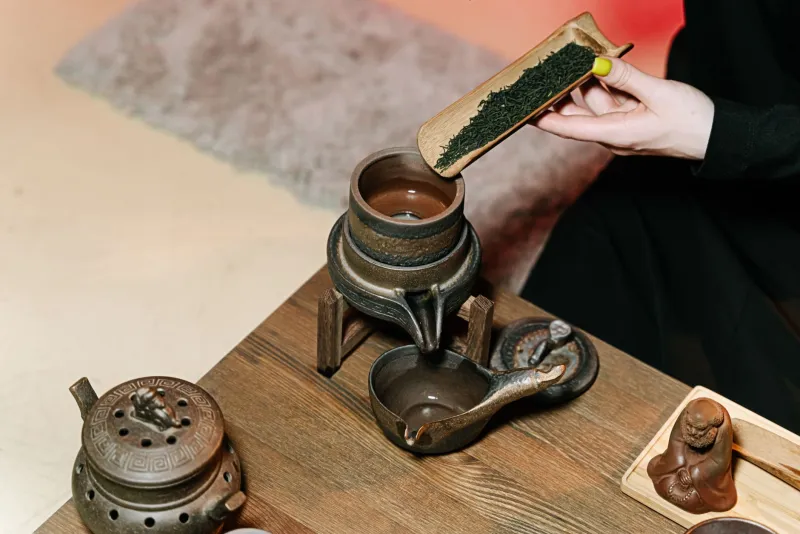
For everyday practice in a small room, the essential kit is modest: a bowl, a whisk, a scoop, a caddy for matcha, and a cloth or two. A second bowl is helpful but not necessary at the outset. A tea caddy for leaf tea may be added if sencha or hōjicha is part of the household's routine, but the principle remains the same: each object should earn its place. Sets sold as complete ceremonial outfits often include pieces that a Birmingham flat cannot store well and a beginner cannot use confidently. It is better to choose one bowl that sits comfortably in the hands, one whisk that fits it, and one scoop that reaches the bottom of the caddy without strain.
Choosing the bowl
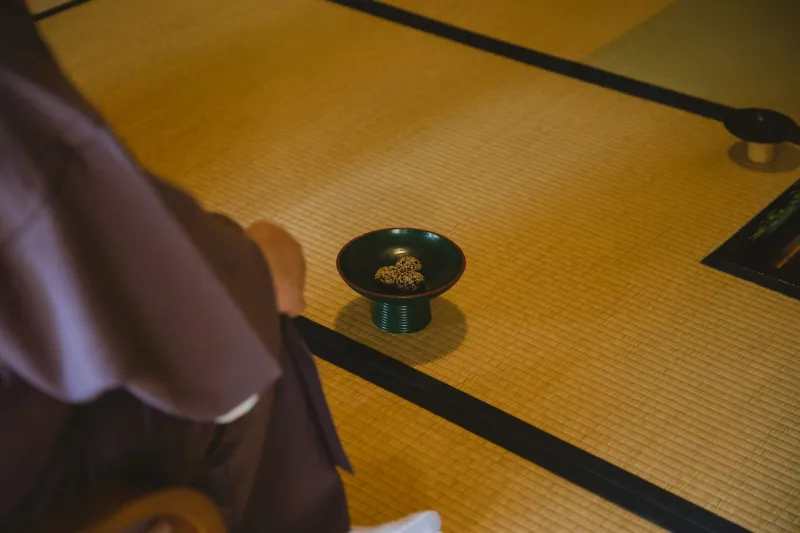
The bowl is the centre of the kit and the object most likely to be bought too hastily. In a limited space, it must be both useful and storable. A bowl of moderate size, with a stable foot and an interior that allows the whisk to move freely, will serve for daily practice. Heavier autumn and winter bowls suit the Midlands climate and the warmer weight of the season; lighter bowls are pleasant in summer. If only one bowl is kept, choose one that feels neither fragile nor ostentatious, and wrap it in a soft cloth when stored. Avoid bowls that require a display shelf; the small room's inventory is working equipment, not an exhibition.
The whisk, the scoop, and the caddy
The whisk should be dried thoroughly after use and kept where its tines will not be compressed. A small stand is useful but a clean, dry jar or box will do. The scoop should be kept dry and free of matcha residue; a quick wipe after use prevents clumping. The caddy deserves particular attention in the UK climate. Matcha is vulnerable to heat, light, and moisture, and Birmingham's damp winters and centrally heated interiors create sharp changes in humidity. A small, airtight caddy kept in a cupboard away from the kettle and cooker is better than a decorative container left on an open shelf. Buy matcha in quantities that will be used within a few weeks, and label the caddy with the date of opening.
Cloths, and the question of lint
A tea cloth should be clean, absorbent, and free of lint. Cotton or linen is suitable; brightly patterned kitchen cloths are less so. In a shared house, keep the tea cloth separate from general kitchen use. Two cloths are enough: one for wiping the bowl and one for drying hands or covering the caddy. They should be washed regularly and dried completely before storage. A slightly damp cloth left in a closed box is one of the most common causes of musty smells in a small tea kit. In a Birmingham flat, where clothes and towels may already dry indoors, give tea cloths a warm, airy place to dry before they are put away.
Storage against Midlands humidity
The city's damp is not extreme, but it is persistent. Tea utensils should not be stored against an outside wall, beneath a bathroom, or in a cupboard that smells of cooking. A wooden box with a loose-fitting lid is often better than a sealed plastic container, because it allows a little air to move while keeping dust away. If a sealed box is used, ensure that every item is bone dry before it is closed. Silica packets may be placed nearby in very damp conditions, but they are not a substitute for drying. Inspect the kit monthly: smell the cloths, look for spots on the whisk, and check that the caddy seal is sound. A few minutes of inspection prevents most problems.
A simple seasonal rotation
Rotation is not about owning more; it is about using what one owns with attention. In autumn and winter, bring out the heavier bowl and a darker cloth. In spring, air the stored bowl and check the caddy for freshness. In summer, use a lighter bowl if one is kept, and dry the whisk more thoroughly after each use. The rotation can be recorded on a small card inside the box: the date of the last airing, the date the matcha was opened, and the date the cloths were washed. This is not bureaucracy; it is a quiet form of care that suits the formal discipline of tea practice.
A kit for a shared house
In shared accommodation, courtesy extends to storage. Label the box clearly, keep it on a shelf that others do not need, and ask before leaving tea equipment on a communal surface. Avoid storing the kit beside spices, coffee, or cleaning products, as these will affect the aroma of the cloth and caddy. If space is very tight, a single shallow box under a bed is acceptable provided it is dry and dust-free. The point is not to create a tea room but to make a reliable place from which practice can begin.
A compact kit is not a compromise. It is a deliberate choice to let a few objects carry the weight of attention. In a Birmingham flat, where rooms are shared and surfaces are busy, that choice is both practical and courteous. The shelf need not be large; it need only be kept with care.