Air Before Aroma: A Scent-Conscious Protocol for Birmingham Tea Rooms

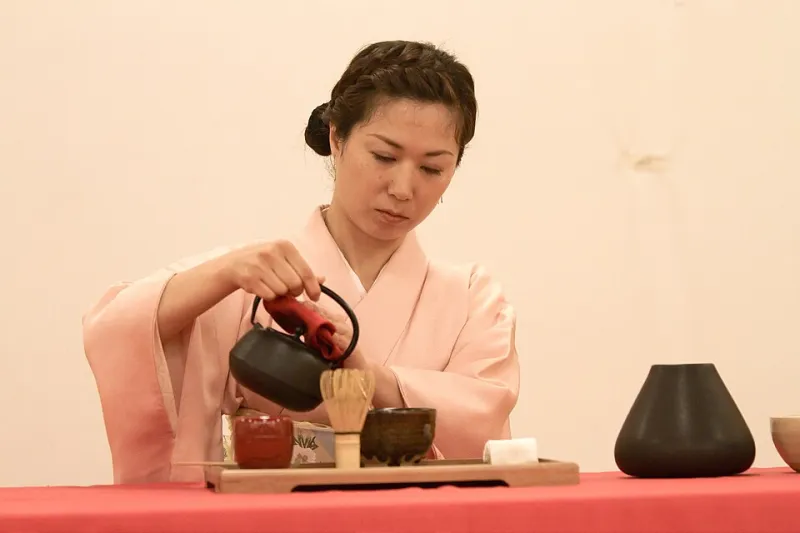
Photo: unscented tea room ventilation open window Japanese tea ceremony, via americanceliac.org
A tea room is judged first by the eye, then by the nose. In Birmingham’s shared halls and home parlours, the scent of the room arrives before the bowl. It may be furniture polish, yesterday’s cooking, a plug-in freshener, or a guest’s perfume. For some guests, these are merely background. For others, they are a barrier. Scent sensitivity is not a fussy preference. Asthma, migraine, allergies, pregnancy, autism, and other conditions can make strong smells difficult or unsafe. A host who plans for scent is not adding a special measure. They are practising ordinary hospitality.
The room speaks before the host does
The first principle is simple: air before aroma. A tea gathering does not need to smell of incense, flowers, or cleaning fluid. It needs to smell of nothing much at all, so that the leaf and the water can be noticed. In a Birmingham winter, this is easier said than done. Windows may be closed against the rain, and the heating may carry dust. The host should open windows for twenty minutes before guests arrive, even if the room cools a little, and then close them once the room is fresh. If the room has trickle vents, use them. If it has a fan, run it on a low setting to move air without a draught.
Ask before the invitation is finalised
A scent-conscious host asks early. The wording should be plain and not medical. In the confirmation message, add a short line: ‘We are planning a low-scent room. Please let us know if you have any sensitivities to scent, smoke, or strong smells, so we can prepare.’ This gives the guest room to reply without having to explain a diagnosis. It also tells every guest that the gathering is being planned with care. If a guest mentions a specific sensitivity, record it privately and plan around it. Do not discuss it at the table.
Incense, flowers, and the temptation of atmosphere
Incense is traditional in some tea settings, but it is not compulsory. If incense is used, it should be a very small amount, in a well-ventilated room, with the consent of those present. A host should never light incense after guests arrive without asking. Flowers should be chosen for shape and season, not perfume. Lilies, hyacinths, freesias, and some eucalyptus can be strongly scented. A single unscented stem is safer and more in keeping with chabana restraint. If a guest has a pollen allergy, keep the arrangement away from the seating area and remove it if necessary.
Cleaning products are part of the ceremony
A room cleaned with a strong spray an hour before the gathering may be worse than a room cleaned gently the day before. Use unscented or low-scent cleaning products where possible. Avoid air fresheners, plug-ins, scented candles, and fabric sprays. Vacuum and dust the day before, then ventilate. Wipe the table with plain water or a mild unscented cleaner. If the venue is a shared hall, ask the site manager what was used and whether the room can be aired before the gathering. In older Birmingham buildings, damp and dust may also be present; a short ventilation period helps more than a masking fragrance.
Guests bring their own atmosphere
Perfume, aftershave, hairspray, and scented hand cream can undo a host’s preparations. The invitation can include a gentle request: ‘To keep the room comfortable for everyone, we are asking guests to avoid perfume and strongly scented products.’ This should be phrased as a shared practice, not a reprimand. Provide unscented soap in the bathroom. If a guest arrives with a strong scent, the host should not shame them. If the sensitivity is serious, a quiet word and a seat near a window may be enough. In some cases, the guest may prefer to leave early; the host should make that easy.
Food aromas and the open kitchen
Tea gatherings often include small food, and food smells travel. Avoid frying or strong spices immediately before the gathering. Keep sweets covered until served. If the kitchen is open to the tea room, close the door and ventilate. A simple plate of seasonal fruit or a plain sweet is less likely to overwhelm the room than a hot savoury dish. This is not a rejection of flavour; it is a question of sequence. The tea should come first in the nose as well as the mouth.
When a reaction happens
No protocol can prevent every reaction. If a guest becomes uncomfortable, act quietly. Offer fresh air, water, and a place away from the group. Do not ask for a public explanation. If the guest needs to leave, help with transport and keep the gathering calm. Afterward, review what happened without blame. The host’s ledger of scent is not a list of failures; it is a record of care.
Sensory courtesy is not an extra
In Birmingham, tea gatherings happen in borrowed halls, busy homes, and rooms that have lived many lives. The host cannot control every smell, but they can choose not to add to them. A low-scent room is not a cold room. It is a room where the guest can breathe, and where the tea can be tasted without competition. That is not a special accommodation. It is the ordinary courtesy on which ceremony depends.